The short answer: late winter, before bud break
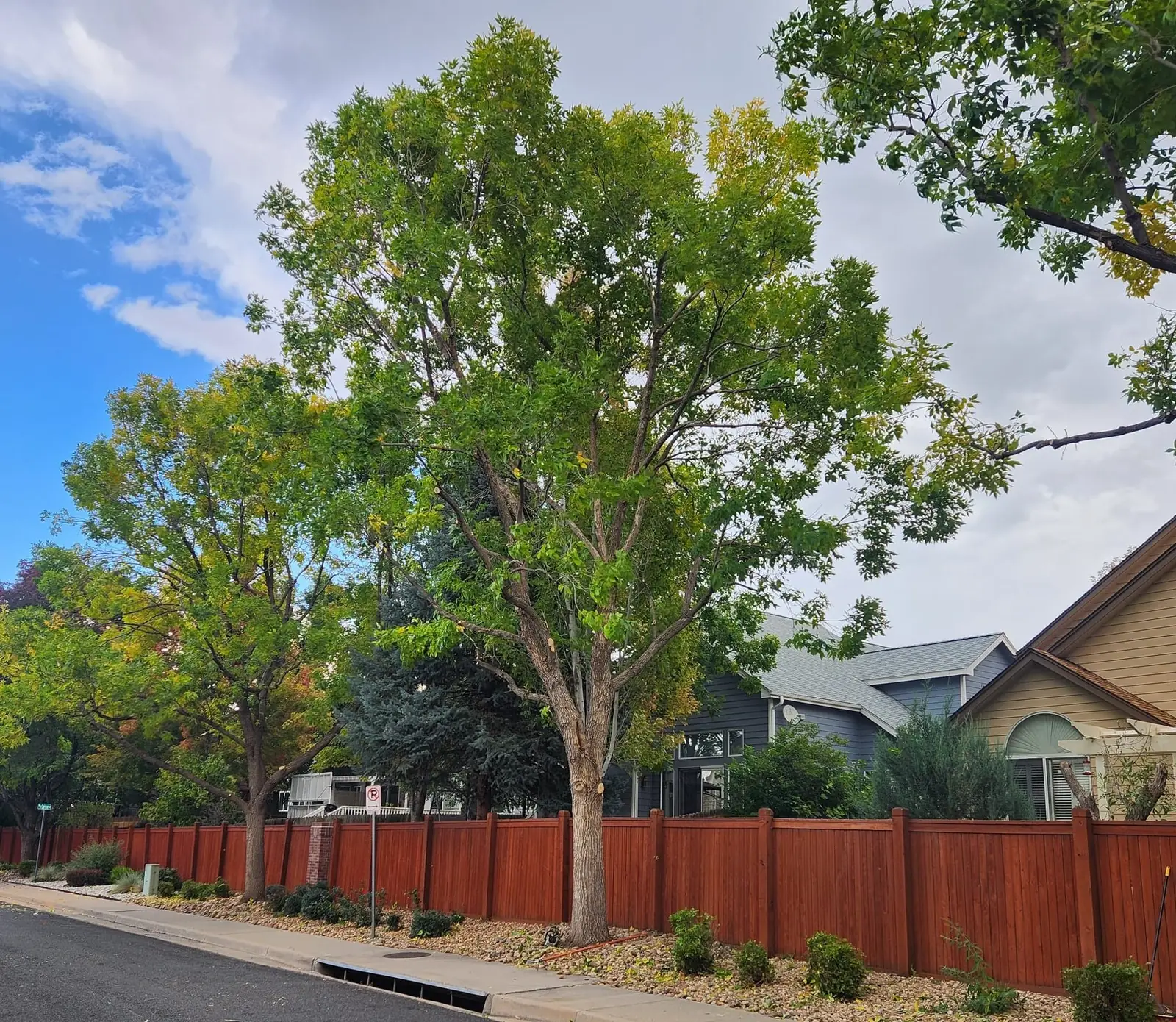
For most deciduous shade trees along the Front Range — maple, honeylocust, linden, hackberry, coffeetree — the best window is late winter into very early spring, roughly February through early April, while the tree is still dormant.
Dormant pruning has three advantages. The structure is visible with the leaves off, so we can see co-dominant leaders and crossing limbs clearly. Wounds seal quickly once growth begins. And insects and pathogens that spread through fresh cuts are inactive.
Species that break the rule
Some trees have timing constraints that override the dormant-season default, and getting it wrong costs you the tree or invites disease.
- Ash — prune while dormant, but never make big cuts on a stressed ash during borer flight in late spring and summer.
- American and Siberian elm — avoid pruning from roughly April through August; fresh cuts attract the beetles that vector Dutch elm disease.
- Oak — same principle, avoid growing-season cuts where oak wilt pressure exists.
- Spring-flowering ornamentals such as crabapple and lilac — prune right after they bloom or you remove next year's flowers.
- Birch, maple and elm 'bleeders' — sap flow from late-winter cuts looks alarming but is cosmetic, not harmful.
- Pine and spruce — prune in late winter; candle-prune pines in spring while shoots are soft.
What can be pruned any time of year
Deadwood, broken limbs and clearly hazardous branches come out whenever you find them. A dead limb over a driveway does not get safer waiting for February.
Storm damage is the same. If a limb is hung, split or resting on a structure, it is an emergency, not a seasonal decision.
The worst time to prune in the Denver metro
Heavy pruning in late summer heat and drought stress is the most common mistake we see. Removing a large share of the canopy right when the tree is already water-stressed pushes weak late-season growth that will not harden off before the first hard freeze.
Second worst: pruning after the tree has already leafed out in May and June, when energy has just been spent on new growth and cuts remove that investment.
How much is too much
ANSI A300 practice keeps live-canopy removal modest in a single visit — commonly no more than a quarter for a healthy mature tree, and less for a stressed or older one. Anything approaching a topping cut is off the table entirely.
Topping is not pruning. It creates weakly attached water sprouts, decay pockets at every stub and a tree that is more dangerous in five years than it was before. If a company offers to top your tree, that is your answer about the company.
Questions we get
Can I prune my trees in the fall?
Fall is the least ideal window. Decay fungi are actively spore-producing, and the tree is moving resources to roots rather than sealing wounds. Wait for dormancy unless the limb is hazardous.
Should I paint or seal pruning cuts?
No. Wound paints trap moisture and slow the tree's natural compartmentalization. A proper cut just outside the branch collar seals itself.