Tree Trimming & Pruning by Local Arborists
Correct cuts that improve structure, clear your roof and let Front Range wind pass through the canopy — never topping.
Certified Tree Trimming & Pruning for Arvada & Wheat Ridge
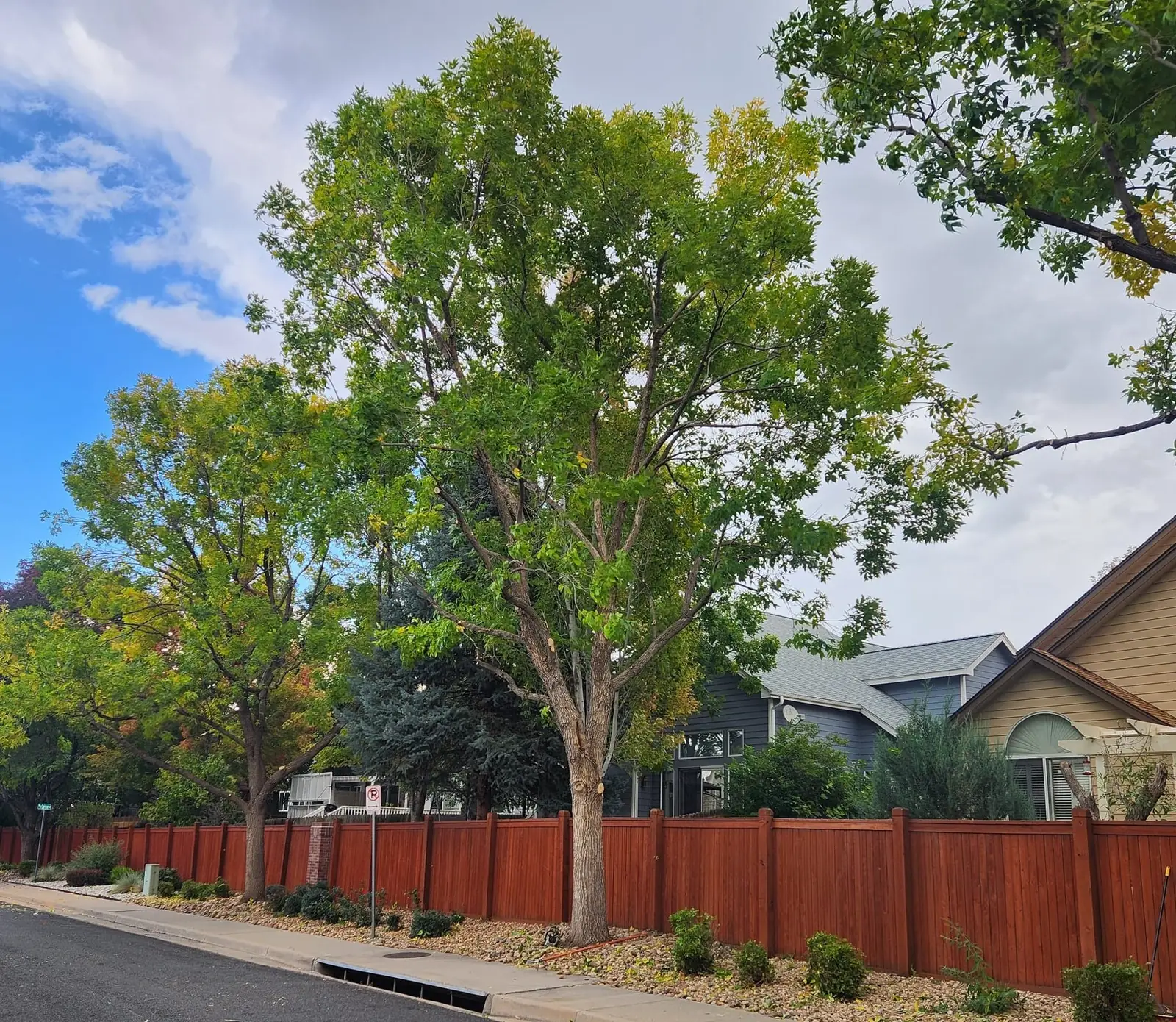
Arvada, Wheat Ridge, and Lakewood have some of the oldest trees in the metro area — big ash, elm and maple trees that were never structurally pruned when young. We prune to ANSI A300 standards: remove deadwood, correct co-dominant leaders, thin for wind and lift canopies off roofs and sidewalks without ever topping a tree.
- Assessment cost
- Free
- Free on-site assessment with a pruning plan for each tree
- Best timing
- Late winter to early spring
- Species-appropriate cuts to ANSI A300 standards
- Service area
- 6 Denver West cities
- Arvada, Wheat Ridge, Lakewood, Golden, Westminster, Denver
The pruning cuts that actually help a tree
Crown cleaning removes dead, diseased and crossing limbs — the highest-value single prune for an older shade tree. Crown thinning opens the canopy so wind passes through instead of pushing on it. Crown raising clears roofs, driveways and walkways. Structural pruning on a young tree sets one strong central leader so you never pay for a storm failure later.
We do not top trees. Topping forces weak watersprout regrowth, opens decay at every cut and shortens a tree's life. Every arboricultural standard discourages it, and any company that offers it should be a hard no.
Best time to prune along the Front Range
Late winter through early spring, while trees are dormant, is ideal for most species: structure is visible, sap loss is minimal and wounds close fast once growth resumes. Deadwood and hazard limbs can come out any time of year.
Two local exceptions matter. Prune elms and oaks outside the growing season to avoid attracting disease vectors, and go light on already drought-stressed trees in mid-summer heat.
What's included
- Crown cleaning, thinning, raising and reduction
- Structural pruning for young and newly planted trees
- Roof, driveway and power-drop clearance
- Deadwood and hazard limb removal
- Fruit tree and ornamental pruning
- Chipped brush hauled away, site blown clean
How the job runs
- 1
Canopy walk-through
We look at structure, deadwood, clearance needs and species-specific timing before quoting.
- 2
Prune plan
You get a plain-English scope: what comes off, why, and how much live canopy we will remove.
- 3
Climb and cut
Rope-and-saddle climbing with clean collar cuts — no spikes on trees we are not removing.
- 4
Cleanup
Brush chipped, lawn and walkways blown clean, logs cut for firewood if you want them.
Tree Trimming & Pruning FAQs
How often should trees be trimmed?
Mature shade trees do well on a 3–5 year cycle. Young trees benefit from a light structural prune every 2–3 years, and fruit trees are best pruned annually while dormant.
Will trimming hurt my tree?
Proper pruning helps. We remove no more than about 25% of live canopy in a visit and cut at the branch collar so the wound closes naturally. Topping and over-thinning are what damage trees.
Can you clear limbs off my roof?
Yes — crown raising and clearance pruning is one of our most common calls. We keep roughly 6–10 feet between the canopy and the roofline to stop abrasion and squirrel access.
Do you haul away the branches?
Always. All brush is chipped and removed, and we blow down the lawn, walkways and driveway before we leave.
Tree Trimming & Pruning near you
Need tree trimming & pruning?
Licensed, insured and local — free estimates, honest recommendations, complete cleanup.